Are Sun Visors Universal?
The straightforward answer — and everything else you need before buying a replacement
The short answer is: no — sun visors are not universally interchangeable. Most are engineered specifically for a vehicle’s make, model, year, and trim level. But “universal” products do exist, and knowing which type you actually need can save you time, money, and a frustrating return trip to the auto-parts store.
What Is a Sun Visor, Exactly?
A sun visor is the hinged panel mounted above the windshield on the interior of a vehicle. Its job is simple but safety-critical: block direct sunlight from the driver’s or passenger’s eyes. Most modern cars have two — one on each side — with the rearview mirror positioned between them.
Beyond that basic function, today’s visors can be surprisingly complex. Many include vanity mirrors with LED lighting, integrated HomeLink garage-door openers, wiring harnesses, swivel extensions that pivot toward the side window, and colour-matched fabric or vinyl to complement the headliner. This complexity is exactly why “one size fits all” rarely holds up.
Historically, exterior sun visors were common on early automobiles — the Ford Model T added one in 1924. Interior mounting became standard from 1931 onward, and as windshield angles grew more aggressive for aerodynamics, the exterior “cadet-style” visor disappeared entirely by 1932. Everything since then has lived inside the cabin, attached to the headliner via a mounting bracket.
Why Sun Visors Are Mostly Vehicle-Specific
The biggest obstacle to true universality is the mounting system. Different manufacturers use different bracket designs, screw spacing, and pivot mechanisms. A Honda Civic visor bracket is not the same as a Toyota Camry bracket, and neither matches what you find in a Ford F-150. Even within the same brand, the hardware can change from generation to generation.
Mounting aside, there are three other key variables that make direct swaps difficult:
1. Wiring and Electronics
Visors fitted with vanity lights or HomeLink modules run wiring through the headliner. The connector type, pin layout, and power routing vary by manufacturer. Fitting a lit visor from the wrong vehicle means either leaving the light disconnected or doing custom electrical work — neither is ideal.
2. Size and Shape
Windshield angles, A-pillar geometry, and headliner curvature differ between vehicle platforms. A visor that is a centimetre too wide, too short, or the wrong shape can leave gaps, fail to lie flat against the headliner, or simply hit the windshield when deployed.
3. Interior Colour and Trim
Visors are faced with material — typically fabric, vinyl, or foam-padded board — colour-matched to the headliner. Even when the physical dimensions work, a grey visor in a beige interior looks wrong and can affect resale value.
Sun visors are model-specific components, not generic accessories. The most reliable replacement is always one designed (OEM or aftermarket) for your exact make, model, year, and trim — including whether your vehicle has a sunroof, since that changes headliner geometry.
OEM vs. Aftermarket vs. Universal — What’s the Difference?
| Type | Fit | Price Range | Best For |
|---|---|---|---|
| OEM (Original Equipment) | ✔ Perfect fit, exact match | $50 – $150+ | Newer vehicles, maintaining resale value, lit / HomeLink visors |
| Aftermarket (vehicle-specific) | ✔ Designed to match OEM specs | $20 – $80 | Budget-conscious replacements; may lack some OEM features |
| Universal Replacement | ~ Variable; often fits poorly | $15 – $50 | Classic cars, kit vehicles, or non-standard setups lacking model-specific options |
| Universal Extender / Clip-On | ✔ Clips onto existing visor | $10 – $30 | Supplementing coverage without replacing the whole visor |
When "Universal" Products Actually Make Sense
There are two categories where universal sun visor products genuinely shine, and it is worth understanding both clearly.
Universal Visor Extenders
These are clip-on accessories that attach to your existing factory visor to extend its coverage area. They do not replace the visor itself — they augment it. Because they clip onto the edge of whatever visor is already installed, they are inherently adaptable to most vehicles. They are widely available, cost between $10 and $30, and install in seconds. They are an excellent solution when the factory visor simply does not block enough light, especially at low sun angles during dawn or dusk driving.
Universal Replacement Visors for Non-Standard Vehicles
Classic car restorers, off-road build enthusiasts, and owners of kit cars or UTVs often find that no model-specific visor exists for their vehicle. In these cases, true universal replacement visors — typically featuring adjustable mounting brackets with slotted screw holes that accommodate a range of 1.25″ to 2″ hole spacing — are the right tool for the job. High-quality examples are made from aircraft-grade aluminium with optical-quality acrylic lenses and offer UV protection rated at 99.9%. They are built to be adapted, rather than designed to pop directly into a specific mounting point.
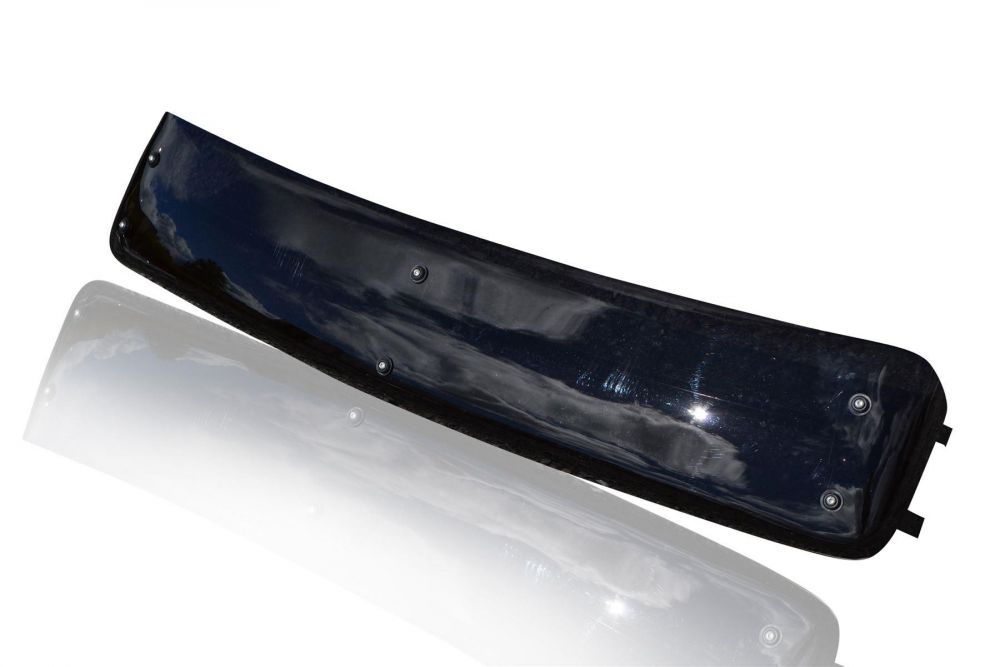
External (Deflector) Visors
A separate product category entirely, external sun deflectors are mounted on the outside of the vehicle at the top of the windshield. They work like a visor hood, blocking overhead sunlight before it enters the cabin. Many of these are sold in vehicle-specific versions for popular vans and SUVs, though some manufacturers also offer genuinely universal options for a wide range of vehicles. These do not interact with the interior mounting system at all, making the “universal” label more realistic here than for interior replacements.
Are Driver and Passenger Visors Interchangeable?
Not always, and this is a common source of confusion. On some vehicles, the left and right visors are identical and can be swapped freely. On others, the pivot angle, vanity mirror placement, or overall shape differs between sides. Before swapping your driver-side visor for the passenger-side unit (or vice versa), check your vehicle’s service manual or confirm with the part number from the manufacturer.
One well-documented example: aftermarket suppliers have shipped mismatched left-hand visor units in packaging labelled for the right-hand side. Always verify both part numbers — driver (left) and passenger (right) — are distinctly different before assuming a pair is correct.
How to Find the Right Sun Visor Replacement
The most reliable path is to use your vehicle’s year, make, model, and trim level to filter parts. Most reputable auto-parts retailers and online marketplaces require these details before showing you compatible options. Beyond that, ask these specific questions before purchasing:
Does your vehicle have a sunroof? If so, you need a visor designed for the sunroof trim, as the headliner cutout is different. Using a non-sunroof visor in a sunroof car can result in a poor fit or visible gap.
Does your visor have a vanity light? If yes, select a replacement with compatible wiring. A lit visor without the matching wiring harness will leave you with a non-functional light — or a dangling connector you need to tuck away.
Does your visor have HomeLink or a garage door opener? These modules are integrated into specific visor assemblies and the wiring connection is vehicle-specific. Confirm the replacement supports this feature and uses the correct connector.
What is your interior colour? OEM parts are colour-coded. Aftermarket options may only be available in a limited range of shades. A slight mismatch is often acceptable; a significant one rarely is.
What About Buying a Used OEM Visor?
Salvage yards and online marketplaces like eBay can be excellent sources for OEM sun visors, often at a fraction of dealership prices. The key is verification. When inspecting a used visor, check the pivot stiffness — it should move smoothly but hold any position without drooping. Inspect the plastic mounting base for cracks around the screw holes, which tend to become brittle with age. And confirm the colour is a genuine match, not just described as the same shade.
When sourcing from a salvage vehicle, look up the VIN of the donor car to confirm the year and trim. GM platforms, for example, are known to share visor designs across multiple model years and related vehicles, making cross-compatibility more achievable — but it still requires verification, not assumption.
Cost of Sun Visor Replacement
OEM visors generally run between $50 and $150 per unit, though luxury vehicles can push that higher. Aftermarket vehicle-specific visors typically land between $20 and $60. If you add professional labour, most shops complete the swap in under 30 minutes — so expect no more than one hour of labour cost at whatever your local shop’s rate is.
Many drivers are surprised to find the job can be done at home in under 15 minutes with nothing more than a screwdriver. The visor is held by one or two screws behind a pop-off trim cover. Once the screws are out, the mount slides free, any wiring is disconnected, and the new unit goes in the reverse order. It is one of the friendlier DIY interior repairs on any vehicle.
Frequently Asked Questions
Can I put any sun visor in my car?
No. Sun visors are designed with specific mounting brackets, sizing, and (in many cases) wiring to match a particular vehicle. Using the wrong visor can result in a poor fit, exposed gaps, or a non-functional vanity light. Always buy one specified for your exact year, make, model, and trim.
Do universal sun visors work?
It depends on what you mean. Universal clip-on extenders that attach to your existing visor work well for most vehicles. Full universal replacement visors — designed to install where the factory visor was — often fit poorly in standard cars and are best suited to custom builds, UTVs, or classic vehicles where no model-specific option exists.
Are sun visors from the same brand interchangeable across different models?
Sometimes, but not as a rule. Manufacturers like GM share visor designs across related platforms, and certain model-year ranges within the same model may use identical parts. However, you should always confirm with part numbers rather than assuming a match.
How do I know if my sun visor has a sunroof-specific variant?
Check your vehicle’s parts catalogue or ask a dealer parts advisor. If your car has a sunroof, always specify that when ordering — the headliner and visor dimensions differ, and ordering the wrong version is a common (and easily avoided) mistake.
Can a sun visor be reupholstered instead of replaced?
Yes, if only the fabric or vinyl surface is worn or torn while the internal structure remains intact. A local auto-upholstery shop can often recover the visor to match your interior for a modest cost, and it will look nearly factory-fresh when done.
Is it safe to drive with a broken or drooping sun visor?
A visor that droops into your line of sight is a genuine safety hazard. If the pivot mechanism has failed and the visor cannot hold its position, it should be repaired or replaced promptly — or tied back temporarily until a replacement arrives. Driving with obstructed vision increases accident risk significantly.
The Bottom Line if Are Sun Visors Universal?
Sun visors are not universal in the way wiper blades or cabin air filters can sometimes be. The mounting hardware, dimensions, electronics, and interior colour make them highly vehicle-specific components. When you need a replacement, the safest and cleanest outcome comes from using a part built for your exact vehicle — OEM from a dealer, a quality aftermarket specific match, or a sourced salvage unit from the same model year.
Universal sun visor extenders, on the other hand, are a genuinely practical accessory that requires no vehicle-specific fitment and can meaningfully improve glare management for almost any driver. If your factory visor leaves low-angle sun getting into your eyes, a $15 clip-on extender is a simple and effective fix.
Know which problem you’re solving, and you’ll know which product you actually need.